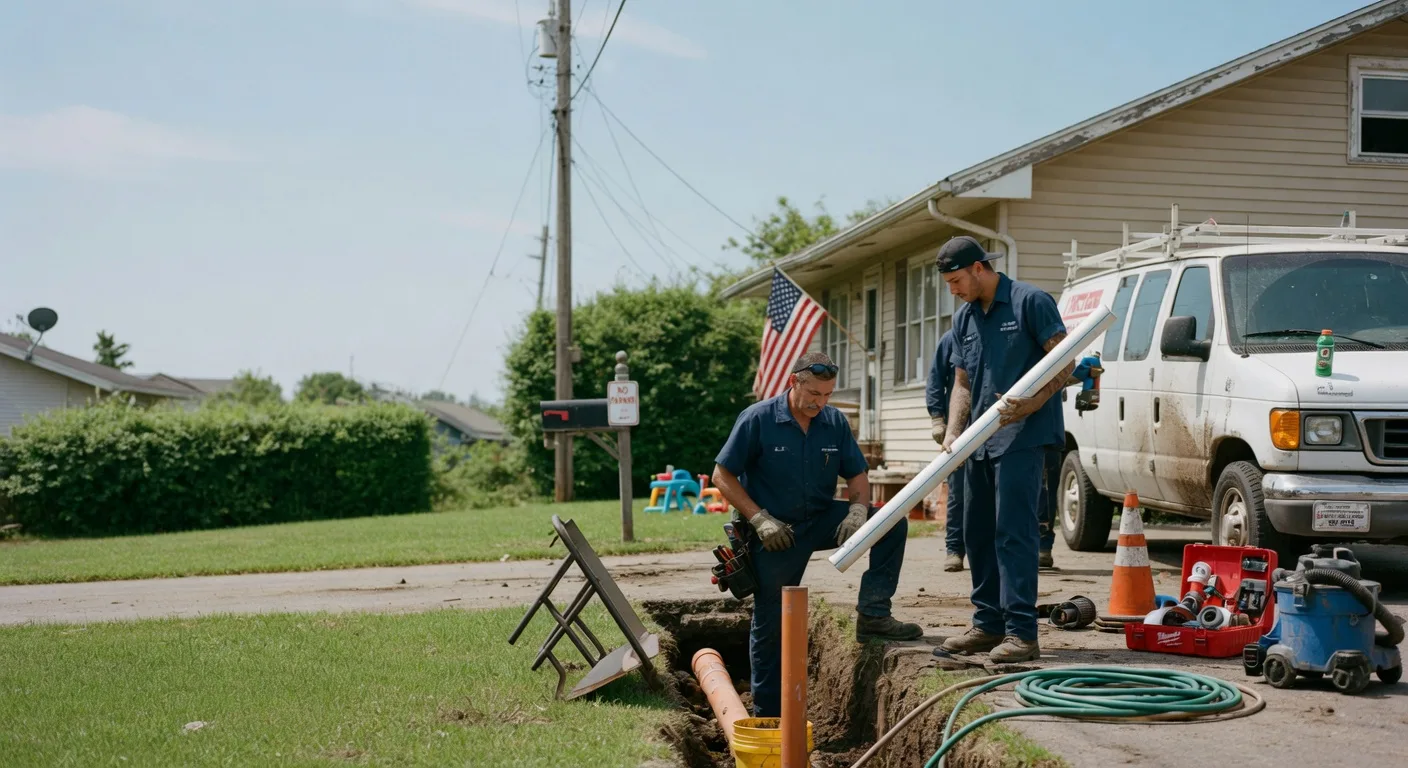
Should the job use a cable machine or hydro jetting?
It depends on what is in the pipe and how far it reaches. A cable machine, sometimes called a snake, is usually enough for a localized clog from hair, paper, or a small root intrusion. The rotating cable punches a channel through the blockage and restores flow, and for a single slow bathroom sink or tub that is all the job needs. The limit of a cable is what it leaves behind. It opens a hole through the middle of a clog, but grease, scale, and sludge stay stuck to the pipe wall, so the line narrows again within weeks. Hydro jetting sends high-pressure water through the line and scours the full interior wall. It is the better call for grease coating a kitchen line, recurring clogs in the same spot, roots that were cut back once and returned, or a line that keeps slowing down after cabling. A jetter needs a reachable cleanout, and it is not right for a pipe that is cracked or collapsing. That is where a camera comes in. A camera inspection shows the pipe's condition before the plumber chooses a method. The plumber decides after seeing the line, and that choice affects the cost of the visit for a home in Cocolamus, PA.
One practical point is that the choice is not always made in advance. A plumber often starts with a cable, finds out what is actually in the line, and then moves to a jetter if the cable returns with grease or sludge instead of a clean break. For that reason it helps to ask which method is planned and what would make the plumber change course. Jetting also depends on pipe condition, which is another reason a camera sometimes comes first on an older line. Clay and cast iron that are thin, cracked, or shifted can be damaged by high pressure, while newer plastic pipe handles it well. Water use matters too: a jetter sends a lot of water into the line, so the drain has to be open and flowing downstream. After either method, run water for several minutes and watch for slow spots or gurgling that might mean something is still in the way.
Can a blocked vent stack cause slow drains even when there is no clog?
Yes. If a sink gurgles, a toilet burbles when another fixture drains, or water moves slowly with no clog anywhere, a blocked vent stack is a likely cause. The vent is the pipe that runs up through the roof. It lets air in behind the water so drains flow freely. When it is blocked, the drain pulls against a vacuum, and the water crawls out of the fixture.
Common causes are leaves, a nest or debris at the roof opening. Inside the wall, a vent can also collapse or fill with scale.
A vent problem often shows up on several fixtures at once. They drain, just slowly, and they gurgle. A clog usually stops one fixture. If every drain in the house is backing up, that is a main line job, not a vent.
Safe homeowner check: listen for gurgling, look at the roof opening from the ground, and run each fixture one at a time to see which ones act up. Do not climb onto the roof yourself.
Stop running water and call now if sewer odor is strong indoors, or a toilet or floor drain is bubbling up.
A cable machine run down from the roof opening clears most vent blockages. If it keeps coming back, a camera inspection shows whether the pipe is damaged. Cost depends on roof access and how far the blockage sits.
Expert Plumbers Co is a referral service. Call (380) 262-9173 and we will connect you with a plumber serving Cocolamus, PA for Drain Cleaning.
Several things can make a vent problem worse or confuse the diagnosis. In cold climates, frost can close the roof opening as moisture freezes around the rim, so symptoms appear in winter and ease in spring. A common mistake is treating the gurgle with repeated plunging or drain chemicals, which does not touch the real cause and can leave caustic liquid in the trap. Another sign it is getting worse is a toilet that fills slowly after flushing or a trap that loses its water seal, because that lets sewer gas into the room. Older homes often have vents routed through cramped walls with long horizontal runs where debris collects, while newer homes may use air admittance valves under sinks that can wear out and stick. When you call, mention which fixtures gurgle and in what order, since that tells the plumber which branch to follow first.
We run a cafe and the kitchen line keeps blocking. Is that the same job as a house drain?
Not quite. A kitchen line that blocks again and again is usually a grease problem, and that is a different job from a house drain.
A cafe pushes far more fat, oil and food solids down the pipe than a home does. The grease cools, sticks to the pipe wall and builds layer on layer. The opening shrinks each week. That is why the blockage returns on a short cycle.
A grease interceptor, also called a grease trap, sits between the kitchen and the main line. It catches fat before it travels downstream. It only works while it has room. Once it is overfull it stops holding grease and passes it straight into the line. So it needs servicing on a schedule, not just when something goes wrong. Many jurisdictions require an interceptor and expect records of each servicing. That is a code matter, so check with your local authority.
A cable machine punches a channel through the grease and leaves the coating on the wall. Water drains for a while, then the channel closes again. A commercial line usually needs hydro jetting, which uses high-pressure water to strip the wall clean. A camera inspection then checks the pipe underneath for cracks, roots or a sag that holds water.
One slow sink is a branch problem. Every fixture backing up points to the main line.
A blocked line in a food business is a shutdown risk, so timing matters. If water is rising near the prep area, stop using the sinks and call.
What the job involves depends on access to the line, how much has to be opened up, the condition of the pipe and any permit requirement. Expert Plumbers Co is a referral service. Call (380) 262-9173 and we will refer your cafe to an independent local plumber in Cocolamus, PA.
Keep a servicing record and a routine. Write down the date each interceptor is serviced and by whom. Authorities that require interceptors usually ask to see those records.
Train kitchen staff on what goes down the drain. Scrape plates and pans into the trash first, fit fine mesh strainers in every sink, and never pour fryer oil down any drain, even with hot water, because it cools further down the line and sets. Hot water and soap only move grease along the pipe. They do not remove it.
Learn the warning signs of a full interceptor: slow draining at the sinks nearest it, a sour or rancid smell, or grease showing in the outlet chamber.
Set the jetting interval after a camera inspection shows how fast the coating builds, so cleaning happens before a lunch rush is lost to a backup. Mention any recent menu change toward fried or fatty food when you call.
Water comes up in my bathtub when the shower or the sink next to it is running. What does that mean?
When water appears in the tub while another fixture runs, the drain water has nowhere to go and is finding the lowest open drain in the bathroom, which is usually the tub. It means the shared drain line past those fixtures is restricted. It is not a tub problem.
The tub drain sits low and connects to the same branch as the sink and often the toilet. If a clog, a bellied pipe holding water, or roots at a joint slows that branch, the extra flow from the sink backs up through the tub drain. A tub that gurgles or burps is showing you the same thing.
The timing tells you something. If it happens only when the sink runs, the blockage may be in that shared branch. If it also happens when the washing machine or a toilet elsewhere in the house is used, the main drain is the likelier suspect, and the whole line is slowing down.
Safe checks you can do: run the sink alone and watch the tub, then run the shower alone and watch the sink. Check whether a basement floor drain or other low drain shows water too. Pull the tub stopper or strainer and clear any hair. Do not keep running water to see how bad it gets, and do not use chemical cleaner in a drain that is already backing up, since the liquid can come back up to your skin.
A cable machine often clears a soft clog in a branch line. If the backup returns, it needs a camera inspection to show whether roots, a bellied section, or a damaged joint is behind it, and hydro jetting may be the next step for grease or heavy buildup on the pipe wall.
Stop running water and call right away if the water in the tub is dark or smells like sewage, if it rises when you flush, or if other drains in the house are slow. That points to the main sewer line, and wastewater is a health risk. Keep children and pets out of the bathroom.
Cost depends on access, how far the blockage sits, whether a cleanout is available, and how much has to be opened or replaced.
Expert Plumbers Co can connect you with an independent local plumber in Cocolamus, PA when you call (380) 262-9173.
The furnace or air conditioner drains into my basement floor drain and now it overflows. Is that a drain cleaning job?
"The furnace drains into my basement floor drain and now it overflows." That is a common one, and it is a drain problem with two parts. The overflow can come from either end: the small condensate line, or the floor drain it empties into.
Condensate lines clog with algae and sludge. Once it blocks, water backs up at the unit or spills from the line onto the floor. Many systems also have a trap on that line, and the trap is the first place sludge collects.
The floor drain itself can be the problem. If it is slow or backs up when you run the washer or a tub upstairs, the cause is in the house drain: grease build-up, a bellied line holding water, or root intrusion at a clay joint further out.
One slow floor drain, with the rest of the house draining fine, usually means a local blockage in that branch. Every drain in the house backing up, or the lowest drain gurgling and rising while others run, points to the main line or a failed sewer lateral.
Safe homeowner check: Look at the pipe from the unit. Is water standing in the pan or trap? Pour a bucket of water into the floor drain and watch how fast it goes. Do not pour bleach or drain chemicals into the condensate line without knowing the unit's instructions.
Stop running water and call now if the floor drain is bringing up sewage or a sewer smell, other drains in the house are slow or gurgling, water is spreading toward electrical equipment or the furnace, or the overflow comes back soon after you clear it.
A cable machine is often enough for a plain clog in the floor drain branch. A condensate line is a different job: it needs flushing or clearing at the line and trap, and may need a cleanout fitting added. If the floor drain keeps backing up, a camera inspection shows whether the main line has roots or a belly. Hydro jetting is used when grease or scale coats the pipe wall.
Expert Plumbers Co is a referral service. We connect you with an independent local plumber in Cocolamus, PA. Call (380) 262-9173.
Ask the plumber to check both the condensate line and the floor drain, and to explain which one failed. Ask whether the condensate should drain somewhere else, since rules vary by area on where it may discharge. Cost depends on access, the parts needed, how much has to be opened up or removed, and any permit or code requirement.